 Business License

Bioactive Glass Particles in Dentistry
Bioactive glass, an intriguing material characterized by its unique properties, has garnered substantial attention for its potential applications in dentistry. Comprising a combination of silicon (Si), calcium (Ca), sodium (Na), and phosphorus (P) oxides, among others, bioactive glass is carefully engineered to mimic the mineral composition of natural bone tissue . This compositional harmony imbues it with a biocompatible nature, allowing for seamless interactions with biological systems, making it an ideal candidate for integration into dental products such as toothpaste .
Bioactive glass comes in various compositions, with prominent variant being 45S5 Bioglass, comprised of silicon dioxide (SiO2): 45%, sodium oxide (Na2O): 24.5%, calcium oxide (CaO): 24.5%, and phosphorus pentoxide (P2O5): 6% . This variant, in particular, holds significant relevance within dentistry. Its application spans a range of dental solutions, from restorations to bone graft materials. The variations in compositional makeup intricately govern the material's bioactivity, degradation rate, and mechanical properties, effectively aligning them with their intended functions .
Upon interaction with oral fluids, bioactive glass particles engage in a captivating and intricate phenomenon termed bioactivity . This process culminates in the creation of a hydroxyapatite (HAp) layer, a calcium phosphate compound (Ca3(PO4)2), within the tooth structure. This intricate process involves ion exchange and chemical reactions: upon contact with oral fluids, bioactive glass particles release sodium ions (Na+) into the fluid, while hydrogen ions (H+) from the fluid migrate into the glass structure. This exchange of ions prompts the creation of a silica-rich layer, commonly termed a silica gel, on the glass surface. This gel-like layer acts as a catalyst, initiating the subsequent formation of hydroxyapatite .
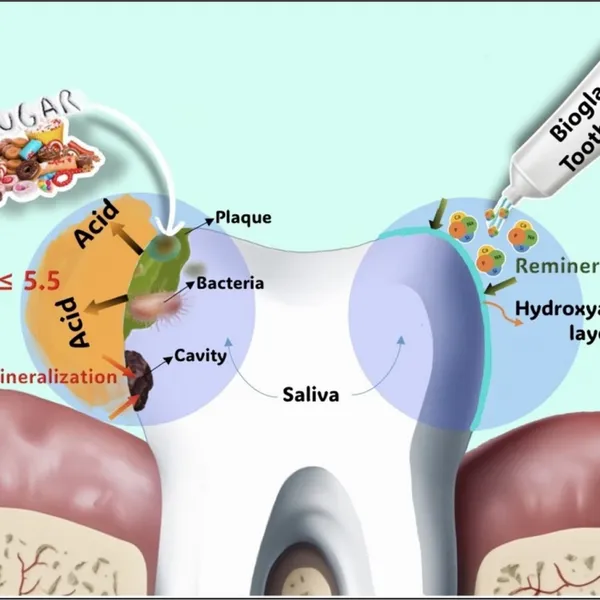
The process of hydroxyapatite formation begins with the deposition of hydroxycarbonate apatite (HCA), which serves as a scaffold for the crystallization of hydroxyapatite. This step closely emulates the mineral composition of natural enamel, promoting remineralization. Rapid release of sodium ions is accompanied by the swift substitution of hydrogen cations (H+ or H3O+). This ion release facilitates the subsequent liberation of calcium ions (Ca2+) and phosphate ions (PO43-) from the glass particles. These initial reactions occur within seconds of exposure to an aqueous environment and persist as long as the particles remain immersed. Consequently, due to the released sodium ions, a localized and transient increase in pH occurs, triggering the precipitation of calcium and phosphate ions, ultimately resulting in the formation of a calcium phosphate layer (Ca3(PO4)2). Over time, as particle reactions persist and the deposition of calcium and phosphorus complexes continues, the formed layer undergoes crystallization and evolves into hydroxyapatite Ca5(PO4)3(OH) . This hydroxyapatite shares chemical and structural similarities with the biological apatite naturally found in teeth. Figure 2 illustrating the demineralization process and mineralization process with the aid of bioglass particle containing toothpaste.
The integration of bioactive glass particles into toothpaste formulations offers compelling benefits for addressing dental caries and dentin hypersensitivity. In the context of dental caries, bioactive glass-based toothpaste aids remineralization by releasing essential ions such as calcium and phosphate . This contributes to the restoration of weakened enamel and enhances tooth resistance against acid attacks. Moreover, the inherent antibacterial properties of bioactive glass particles contribute to the creation of a protective hydroxyapatite layer, effectively shielding teeth from harmful bacterial activities. On the other hand, regarding dentin hypersensitivity, the bioactive glass’s ability to deposit hydroxyapatite-like layers on exposed dentinal tubules aids in occluding tubules and reducing nerve exposure . This provides relief from the discomfort associated with DH by preventing external stimuli from triggering nerve responses within the dentin.
Over the decades, the toothpaste is serving as a fundamental tool in maintaining oral hygiene, playing a crucial role in safeguarding dental health. Its daily use is pivotal for upholding oral well-being by combating various dental issues that can compromise overall health. Among the prevalent dental concerns, tooth decay, enamel erosion, and sensitivity pose significant challenges. Toothpaste, enriched with an array of essential components and ingredients, plays a vital role in preventing and managing these dental problems. Commonly containing fluoride, toothpaste strengthens enamel and guards against acid attacks, reducing the risk of cavities. Abrasives, such as silica, contribute to plaque removal and stain prevention, maintaining dental aesthetics . Moreover, toothpaste formulations often include desensitizing agents, like potassium nitrate, to alleviate sensitivity, providing relief to individuals who experience discomfort from hot, cold, or sweet stimuli . However, tackling the multifaceted challenges of oral health requires an approach beyond conventional toothpaste.
In the realm of innovative dental care, the integration of bioactive glass particles into toothpaste formulations emerges as a promising solution. Bioactive glass introduces a new dimension to toothpaste functionality. The amalgamation of bioactive glass particles into toothpaste not only enhances its preventive capabilities against tooth decay, enamel erosion, and sensitivity, but also presents a holistic approach to oral health maintenance. This innovative avenue holds the potential to revolutionize traditional oral hygiene practices, contributing to a brighter and healthier dental future.
https://link.springer.com/article/10.1007/s40496-024-00366-3
Recently Posted
-
Bioactive Glass: Pioneering Bioactive Glass Innovation, Opening a New Chapter in Global Health
December 12, 2025Qingyan New Materials: Pioneering Bioactive Glass Innovation, Opening a New Chapter in Global HealthAt the forefront of materials Read More
 -
Introduction to bioactive glass
November 24, 2025The academic name of bioactive glass originated in 1969 when American biomaterials scientist Larry Hench discovered that a silicon-containing glass could form a bony bond with bone tissue and induce the formation of new bone tissue, regulating bone development and growth. Based on this, he proposed the concept of "bioactivity". In the cosmetic raw material directory, it is called calcium sodium phosphosilicate, andRead More