
 Business License

Introduction to bioactive glass
The academic name of bioactive glass originated in 1969 when American biomaterials scientist Larry Hench discovered that a silicon-containing glass could form a bony bond with bone tissue and induce the formation of new bone tissue, regulating bone development and growth. Based on this, he proposed the concept of "bioactivity". In the cosmetic raw material directory, it is called calcium sodium phosphosilicate, and its commercial name is NOVAMIN, etc.
Bioactive glass has a good effect on reducing dentin hypersensitivity and can be used as a desensitizer for teeth. It has been included in the "Guidelines for the Diagnosis and Management of Dentine Hypersensitivity". It has the function of preventing caries and promoting tooth remineralization and is used in medium and high-end toothpaste, such as Colgate Sensitive with NOVAMIN added.
It can reduce skin redness and visible wrinkles and is used in high-end cosmetics.
It has the function of promoting wound repair and is used in wound dressings.
It promotes the formation of bone tissue and has good biocompatibility, and is used in bone repair implant medical devices.
Recently Posted
-
Bioactive Glass: Pioneering Bioactive Glass Innovation, Opening a New Chapter in Global Health
December 12, 2025Qingyan New Materials: Pioneering Bioactive Glass Innovation, Opening a New Chapter in Global HealthAt the forefront of materials Read More
 -
Bioactive Glass Particles in Dentistry
December 2, 2025Bioactive glass, an intriguing material characterized by its unique properties, has garnered substantial attention for its potenti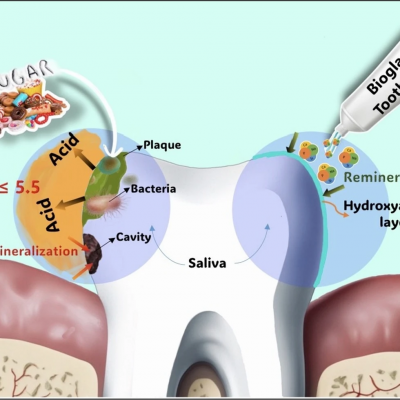 Read More